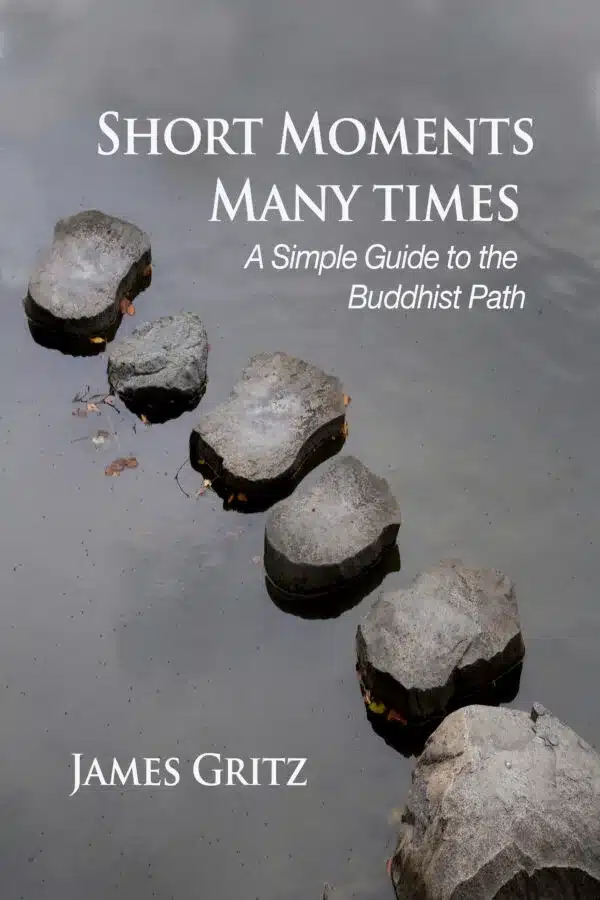
By James Gritz
Modern life seduces us with a relentless barrage of distractions and entertainment. The incessant notifications on our phones are like sirens beckoning us to scroll through the continual stream of online detours. It is all too easy to feel fragmented and disconnected when we lose the present moment.
Next time you visit a coffee shop, take a moment to observe those around you. How many people do you see engaged in conversation? How many people are truly paying attention to drinking a cup of coffee? Many have locked themselves in the virtual worlds inside their phones or laptops? Amid this constant sensory bombardment, the practice of mindfulness offers tools to cut through the chaos and regain a stable seat in the world.
There is a well-known analogy in Buddhist teachings that illustrates our restless tendency to seek distractions. The mind is often compared to a wild monkey, endlessly jumping from branch to branch, never able to settle. This “monkey mind” is constantly looking for entertainment and satisfaction, always looking for the next banana. In contrast, the path of mindfulness and meditation is likened to training an elephant—a slow and deliberate process requiring patience and persistence. Just as an elephant is trained to take one careful step at a time, mindfulness develops through returning to short moments of awareness again and again. With gentle and consistent practice, the restless monkey mind settles,allowing the wisdom mind to arise. This enables us to become calm and steady, capable of navigating through life’s challenges and anxieties with clarity and awareness.
In our modern culture, mindfulness, meditation, and the quest for peace are frequently just shallow buzzwords. We hear about their benefits—peace, happiness, and relief from a chaotic, stressful world. It sounds so enticing. For years now mindfulness retreats have been sprouting up like mushrooms after an autumn rain. It is worth asking what’s sending everyone out foraging for a bite of tranquility. Are we merely seeking a momentary reprieve from anxiety, like a meditation tranquilizer numbing our discomfort, or are we genuinely ready to transform our lives by embracing a more authentic way of being? When we choose to live fully in each moment, we step onto the path to true freedom.
Mindfulness training is not about accumulation but subtraction. It’s about peeling back layers of habit, distraction, and ego to reveal what has always been there. At first, it might feel exhilarating, like the thrill of a new romance. But what emerges when the initial spark fades? Today, marketers often pitch mindfulness as a quick fix, promising peace and wellness in digestible, bite-sized pieces. Scroll through YouTube, and you will find guided meditations for self-love, tutorials on manifesting positive energy, and even spiritual ice baths. Slick advertising for yoga retreats in the tranquil Riviera Maya of Mexico tries to seduce you with green smoothies, hot-stone massages, and sunrise yoga by the sea. While these offerings may bring comfort, they often just skim the surface—little more than a quick bandage for the frequent wounds of modern anxiety.
Training the mind demands more than watching the sunset on the beach, margarita in hand. It requires dedicated, ongoing effort to find the calm and clarity beneath the noise. Are we willing to do the work, or are we content to simply body surf life’s turbulent waves?
I don’t write this from the perspective of an accomplished practitioner of the Buddha’s teachings. Rather, I offer these pages as companions on the path, sharing guiding instructions I have received from my own teachers that I try to follow. I am not inventing anything new here. Everything conveyed in these pages comes from a long lineage of teachings, passed down from the Buddha through an unbroken lineage. For me, this book will also serve as a manual for my own daily practice—a commitment to walking the talk. It is both a record of what I’ve learned and a reminder to return to these principles in daily life.
….If your goal is simply to soothe your nerves, you might find quicker relief at a spa or through modern therapies. Some psychologists now prescribe microdoses of psilocybin mushrooms. I am not saying there is anything wrong with these approaches. They may suit your particular needs. But the Buddhist path aims for something deeper: training the mind and heart to meet reality as it is, free from the projections of our restless “monkey mind.”
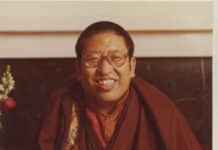
…..My journey began with the teachings of Chögyam Trungpa Rinpoche, who first opened the door to the wisdom of Tibetan Buddhism for me. Under his guidance, I glimpsed the possibility of ease and confidence and sought freedom from the loops of my own habitual patterns. It did not come easy. Trungpa Rinpoche had little patience for “sauna bath meditation.” For a ’70s hippie like me, the discipline and structure of the path he presented at first seemed rigid and strict. I never envisioned myself wearing a suit and tie.
I learned from Trungpa Rinpoche that even my shyness was a strategy created through ego-clinging and that my self-centeredness was the obstacle to feeling comfortable and confident in the world. Finding comfort in the self-created cocoon of the ego prevents you from transforming and developing compassion for yourself and those around you.
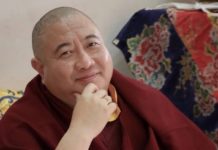
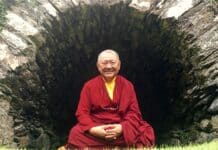
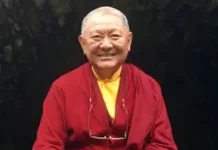
After Trungpa Rinpoche’s death, my path was later guided through studying with other contemporary Tibetan Buddhist teachers, including Dzongsar Khyentse Rinpoche, Jigme Khyentse Rinpoche, Dzogchen Ponlop Rinpoche, Tsoknyi Rinpoche, and Mingyur Rinpoche, each offering their unique insights into mindful being. The wisdom of Zen masters like Shunryu Suzuki and Thich Nhat Hanh, which I encountered through their writings, has also deepened my understanding of mindfulness and compassion. The guidance of these teachers shapes the practices presented here—practices designed to reveal our innate clarity and support living more fully and authentically. ….. Buddhist teachings invite us to go beyond merely wishing for a better life. They encourage us to find the root cause of our suffering and become conscious stewards of our well-being. The journey of transformation requires genuine courage. It’s almost second nature to point fingers at a difficult boss, a frustrating spouse, or even blame karma itself for our discontent. Yet the Buddha’s message is clear: we are the architects of our own lives. This doesn’t mean that we cannot seek help from a spiritual teacher or psychotherapy, but the fundamental truth is that there is no external savior outside of your own mind.
Through the seemingly simple practice of observing our breath, thoughts, and feelings, we can begin to free ourselves from habitual patterns, gradually untangling the ignorance that fuels our dissatisfaction. This is the essence of the Buddha’s path to freedom.
Mindfulness practice is not about achieving some idealized state of calm or happiness – it is about learning to engage directly with life. Freedom from distraction doesn’t come from retreating from life’s challenges but by fearlessly embracing them. As Chögyam Trungpa explained:
‘Unskilled farmers throw away their rubbish and buy manure from other farmers, but those who are skilled go on collecting their own rubbish, in spite of the bad smell and the unclean work, and when it is ready to be used they spread it on their land, and out of this they grow their crops… the Buddha says, those who are unskilled will divide clean from unclean and will try to throw away samsara and search for nirvana”
An ebook version can be ordered at: https://jamesgritz.com/books/