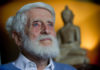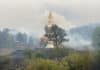
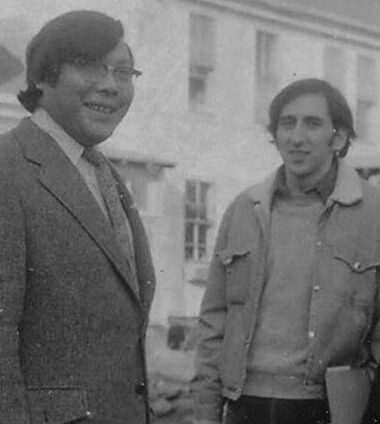
Karl G. Springer passed away on March 13, 2019, in Seattle, Washington. Earlier this year, Karl’s family decided to spread his ashes around The Great Stupa at Drala Mountain Center in Colorado. A group of Karl’s family and friends gathered to mark this event on July 9, 2025.
Karl was among Trungpa Rinpoche’s earliest students in the United States. He met Trungpa Rinpoche after traveling to Tail of the Tiger Meditation Center, now Karme Choling, in Barnet, Vermont. He described to me the drive he took with his friends from college to see the Tibetan Lama he had heard about. He said he never looked back after meeting Rinpoche.
I do not know all the roles Karl played within Vajradhatu, Nalanda, and Shambhala Training, but Trungpa Rinpoche eventually appointed him as head of the Vajradhatu Office of External Affairs. In this capacity, Karl led interactions and collaborated with other Buddhist sanghas, organized visits from renowned Tibetan teachers, and occasionally lectured on Vajra Politics.
I met Karl in 1986 when he was visiting Los Angeles and I was a college student nearby. Karl attended a Sadhana of Mahamudra feast at the Los Angeles Dharmadhatu, and we got to talking afterward and later corresponded by mail. I had never met Trungpa Rinpoche, but I was getting connected to meditation while simultaneously nursing some doubts and skepticism about the Vajradhatu scene during that era. I think Karl enjoyed my youthful exuberance, and he invited me to sit in on his planning meetings for the upcoming World Buddhist Congress in Los Angeles. Shortly after that, Trungpa Rinpoche passed away, and Karl encouraged me to attend the cremation at Karme Choling.
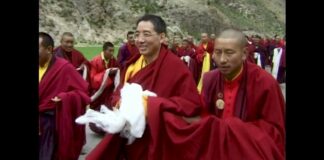
I flew from California to Vermont for the cremation, and Karl invited me to audiences and other encounters with the visiting Tibetan teachers at the event. The first-hand experiences with these teachers helped me understand my own preconceptions about learning the dharma from non-Westerners, as well as giving me an opportunity to experience different aspects of devotion to the dharma and the teachers.
The next time I saw Karl was at the 1988 Vajradhatu Seminary, where we shared a few meals together, and he once again invited me sit in on a meeting with a visiting Tibetan teacher. I asked him why he would invite a “newbie,” such as myself, to these encounters, but he seemed to think it was a weird question, and he indicated that it was important to provide opportunities for people to connect with teachers.
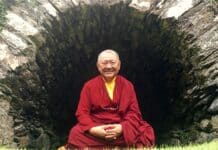
I communicated with Karl infrequently during the period of the Vajra Regent’s illness and the transformation of Vajradhatu into Shambhala International. After the Vajra Regent’s death, Karl deepened his relationship with Thrangu Rinpoche, but he always described the importance of propagating Trungpa Rinpoche’s teachings. Karl suffered from a painful degenerative neurological disorder, which he regarded as a constant teaching. We would laugh over how he had re-discovered the truth of suffering and the practice of acceptance.
Karl was an inspiring figure for me. He had no sympathy for fakes or people engaged in self-deception. He was willing to work hard to achieve his goals and to serve his guru, even if it meant enduring discomfort or ridicule. He said that the great thing about shamatha-vipashyana practice—in the manner taught by Trungpa Rinpoche—was that you can’t build anything out of it. He somehow had an early realization that the path was a matter of giving up allegiance to one’s habitual reactivity and then opening one’s eyes to the already-existing wisdom. I felt that Karl saw, acknowledged, and appreciated me in a very complete way, which was special. His primary meditation instruction to me was simply to join all experiences with meditation, to include it all in the practice. Karl had a profound understanding of the choicelessness of one’s path. He seemed to stand with one foot in samsara and one foot in nirvana, expressing and dancing with the energy which encompasses both.
I appreciated the opportunity to join with others in spreading Karl’s ashes at The Great Stupa. It was great, indeed, to feel his ashes and toss them into the wind. I regret not communicating more with Karl towards the end of his life. I offer this note as an expression of friendship.
-Ed Zaron Tingdzin Nyima Sherap Dashon